How Much Work Does Your Ecommerce Platform Create Behind the Scenes?
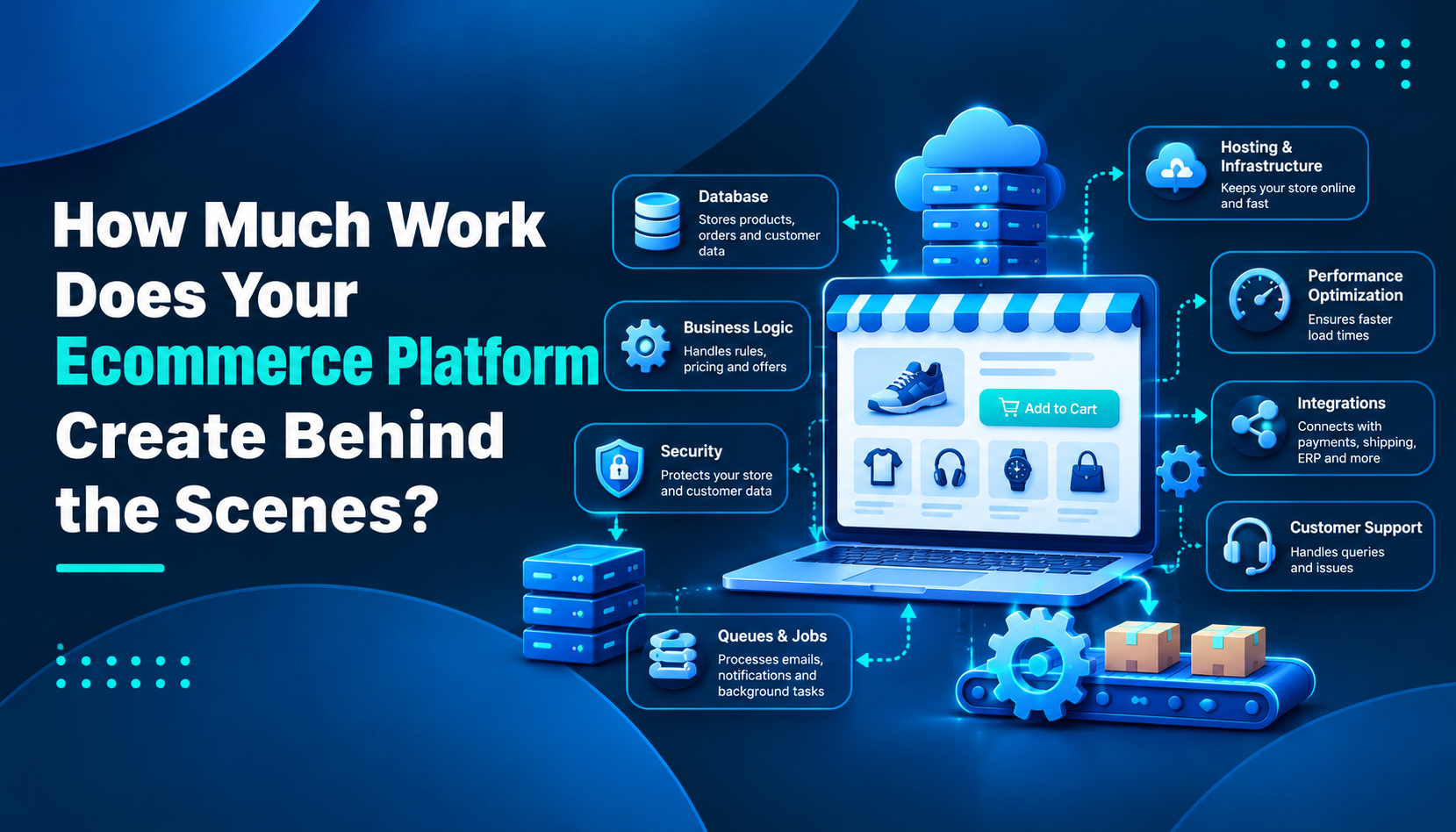
Ecommerce platform operational capacity, the engineering time required to keep a commerce platform secure, compatible, and running, is the cost most organizations undercount and the one that most directly constrains business growth. Licensing fees are visible. The hours consumed by patching, compatibility testing, infrastructure management, and incident response are not. They distribute across engineering, QA, DevOps, infrastructure, and integration teams, disappearing into multiple budget lines and rarely surfacing as a single comparable number. When that distributed cost grows large enough, it stops being an operational expense and starts being a growth constraint. This guide explains how to measure it accurately, what drives it, and when the numbers make a different operating model commercially necessary.
Why Platform Maintenance Is a Resource Allocation Decision
Every engineering hour spent keeping a commerce platform operational is an hour unavailable for the work that moves the business forward. That is an allocation decision, not a technical one, and it compounds as customization depth, integration density, and technical debt accumulate over time.
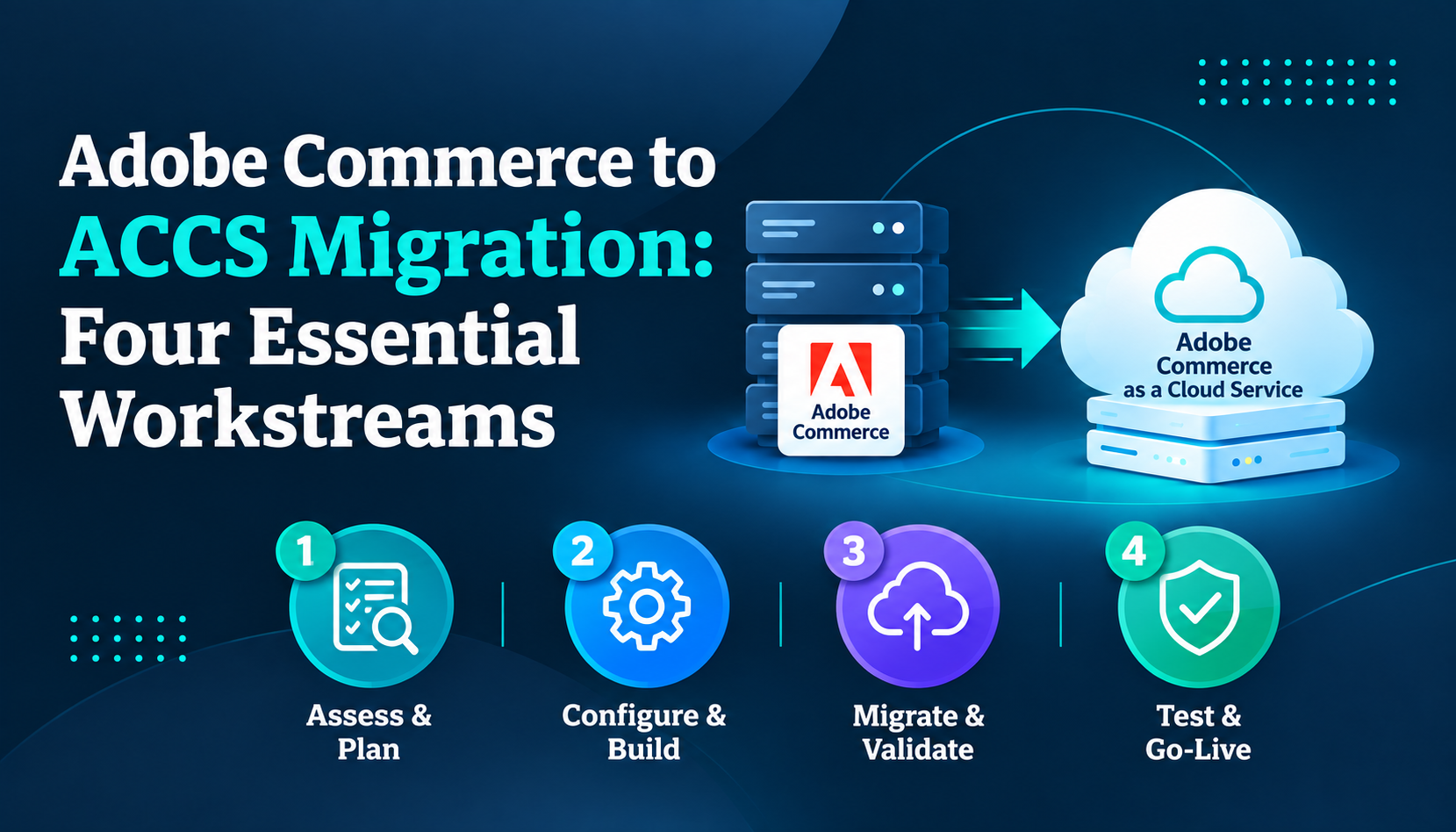
A modern Adobe Commerce environment spans PHP, Composer, OpenSearch, MariaDB, RabbitMQ, ActiveMQ Artemis, and Valkey. Each component carries its own version requirements, compatibility constraints, and security lifecycle. Managing that stack requires ongoing engineering ownership that extends well beyond the commerce application itself. The productive question is not whether the platform can support the business. It is how much organizational capacity running the platform actually consumes, and whether that allocation remains commercially justified given what the business needs to accomplish.
Where Ecommerce Platform Capacity Actually Goes
The operational burden of a self-managed commerce environment distributes across multiple teams and responsibility areas that rarely appear together as a single number. The realistic footprint includes:
Platform engineering covering version upgrades, configuration management, and custom code maintenance
Security covering vulnerability remediation and patch deployment across the full stack
Infrastructure covering hosting, databases, caching layers, search infrastructure, and message queues
Release engineering covering dependency management and deployment coordination
QA covering regression testing across all custom functionality after every platform change
Integration management covering ERP, PIM, CRM, payment, and third-party system connections
Performance covering monitoring, tuning, and readiness ahead of peak traffic events
Incident response covering production troubleshooting and resolution
None of this is unnecessary. Every commerce environment requires technical ownership. The issue is opportunity cost — every hour here is an hour unavailable for customer experience development, conversion optimization, automation, or new commercial capabilities.
Platform Complexity Is Not Determined by Feature Count
Two organizations running the same Magento release can face completely different operational demands. The difference is not the platform version, it is the number of technical relationships each organization must continuously validate and manage.
A heavily customized environment requires ongoing validation across application and dependency versions, custom modules and extensions, search and database behavior, caching and messaging services, external integrations, custom storefront logic, and deployment processes. Every component can introduce another testing cycle and another remediation effort with every platform change.
McKinsey research found that CIOs estimate technical debt at 20 to 40 percent of their entire technology estate value, and that 10 to 20 percent of budgets intended for new product development can be redirected toward addressing accumulated debt instead. A structured platform comparison helps organizations understand how different commerce platforms distribute technical responsibility across infrastructure ownership, customization depth, and ongoing maintenance accountability.
The Framework That Makes the Cost Visible: Run Capacity vs. Change Capacity
Separating engineering work into two categories makes the allocation visible and measurable.
Run capacity keeps the platform operational:
Security patching and vulnerability remediation
Version upgrades and compatibility testing
Infrastructure management and monitoring
Incident response and production troubleshooting
Extension remediation after platform changes
Performance tuning and peak-load readiness
Release management and deployment coordination
Change capacity improves the business:
New customer experiences and storefront capabilities
Conversion rate optimization
Automation, personalization, and analytics development
New integrations and revenue-generating functionality
Every commerce environment needs some run capacity. The question is not whether to invest in it, it is whether the current allocation leaves enough change capacity for the business to execute its roadmap at the pace it actually requires.
Calculating the Platform Capacity Ratio
A simple formula makes the allocation measurable:
Platform Capacity Ratio equals Platform Maintenance Hours divided by Total Available Engineering Hours multiplied by 100.
If an organization has 10,000 available engineering hours annually and spends 3,000 on platform maintenance, 30 percent of total engineering capacity goes to platform operations. Whether that proportion is acceptable depends entirely on what the remaining 70 percent needs to accomplish, not on any external benchmark.
Three Factors That Drive Platform Operational Overhead
Customization Depth
Custom functionality creates genuine business value when it supports commercially differentiating processes that competitors cannot easily replicate. The problem begins when customizations persist because they were historically built, not because they serve a current commercial purpose. Every additional module introduces another component to test and validate with every platform change, regardless of whether the underlying need still exists.
Integration Dependency
Commerce platforms rarely operate independently. ERP, PIM, CRM, payment, fulfillment, tax, and analytics systems introduce dependencies that must be managed alongside every platform change. The tighter those connections to the core platform, the greater the disruption potential from updates and the greater the engineering effort required to manage each release safely. Integration density compounds operational overhead in ways that often only become fully visible during major version upgrades.
Infrastructure Ownership
Self-managed environments provide genuine architectural control, and that control is strategically valuable when the business genuinely needs it. But control creates continuous responsibility. Teams managing databases, search infrastructure, caching layers, message queues, monitoring systems, and deployment pipelines carry that overhead alongside the commerce application on an ongoing basis. The strategic question is whether the business extracts sufficient value from that control to justify the capacity it continuously consumes.
When Operational Overhead Justifies a Migration Conversation
Migration should start with an operating-model assessment, not a preferred destination platform. The assessment should establish what the current environment actually costs in engineering capacity before any alternatives are evaluated.
A thorough assessment measures:
Maintenance tracking engineering hours spent keeping the platform current per quarter
Customization identifying which custom capabilities remain genuinely essential
Infrastructure quantifying how much infrastructure ownership the business requires
Integrations mapping the number and criticality of connected systems
Releases measuring testing and remediation effort per release cycle
Incidents tracking frequency and engineering hours consumed per production incident
Innovation capacity calculating hours remaining for strategic development
Total cost of ownership combining internal resources, support, and infrastructure costs
Research shows downtime can cost Fortune 1000 companies as much as one million dollars per hour, making platform reliability a direct revenue consideration rather than a maintenance budget line. Some operational burden is unavoidable. A recurring compatibility problem driven by outdated custom code is a different and avoidable category of cost.
A structured platform assessment establishes where current capacity is consumed before any migration decision is reached. Instead of saying “our platform requires too much maintenance,” leadership can say: “The platform consumes X engineering hours per quarter, representing Y percent of available capacity, while Z percent remains available for new commerce development.” That framing is a significantly stronger basis for evaluating whether the current operating model remains commercially justified.
Where Migration Services Fit in the Evaluation
When the assessment shows the platform consumes more capacity than the business can sustain, migration becomes a question of how things need to work differently, not simply where the storefront moves.
The evaluation should address architecture, catalog and customer data, integrations, SEO continuity, and existing customizations, determining which capabilities to retain, which to redesign, and which technical responsibilities the target platform can absorb.
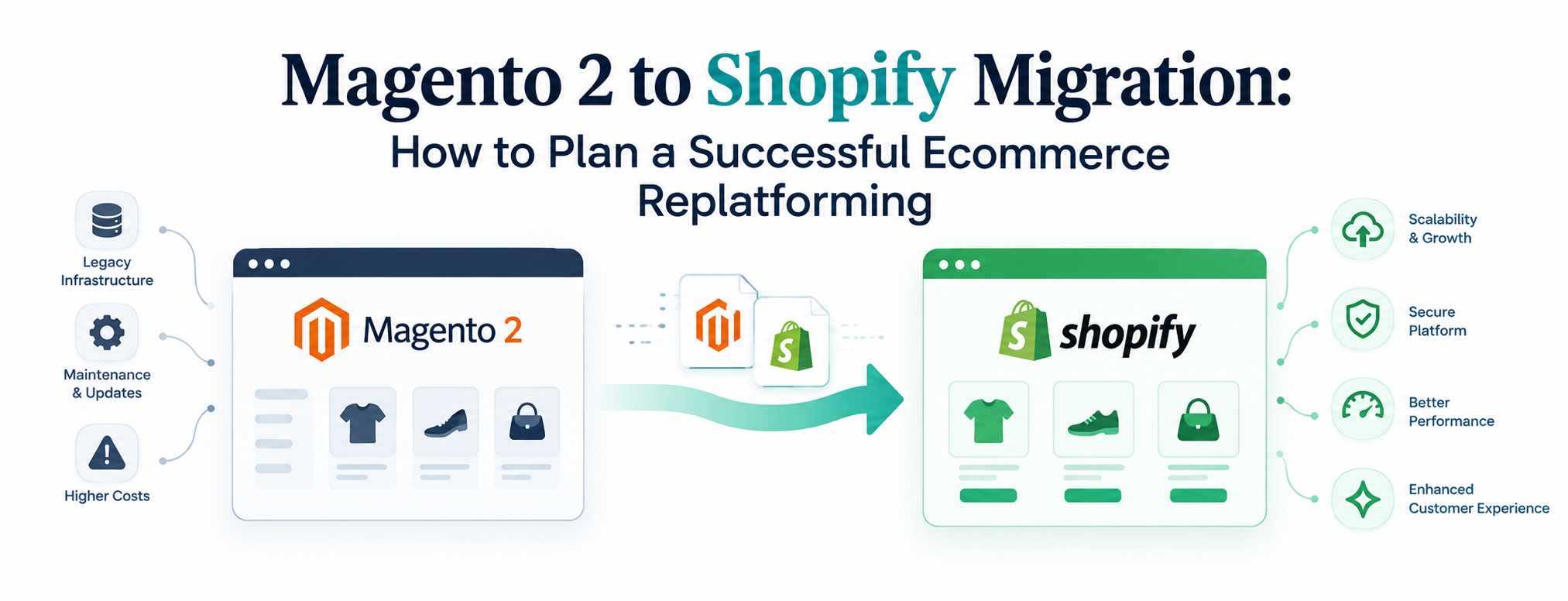
For organizations evaluating a move from Magento to Shopify Plus, three resources frame the practical scope:
The Magento to Shopify Plus migration checklist provides a structured framework for identifying technical dependencies before committing to scope
The Magento to Shopify Plus migration cost guide covers the factors that influence project scope and investment at different complexity levels
The complete Magento to Shopify Plus migration guide addresses broader operating-model and market considerations driving migration decisions in 2026
Shopify Plus shifts significant infrastructure responsibility to the provider. Enterprise teams retain ownership of integrations, custom applications, business workflows, and data architecture. The meaningful difference is where complexity resides and who carries the ongoing responsibility for managing it, not platform complexity in the abstract.
The Real Cost of a Platform Is the Capacity It Consumes
Platform costs are visible in licensing, hosting, development, and support invoices. Engineering capacity is harder to see because it distributes across developers, DevOps teams, QA resources, infrastructure owners, and external partners, appearing across multiple budget lines rather than as a single comparable figure.
That distribution makes engineering capacity the most consistently underweighted component of ecommerce total cost of ownership, and the one with the greatest compounding impact on what the business can actually build and deliver over time.
The objective is not to minimize engineering involvement. Every serious commerce operation requires technical resources. The question is whether the capacity required to operate the platform remains proportional to the commercial value it provides in return.
Measure the hours. Separate mandatory maintenance from complexity driven by customization, integration density, and accumulated technical debt. Compare the operating burden against what the business genuinely needs from its engineering capacity. When the existing platform consumes capacity the business needs elsewhere, migration becomes a commercially grounded operating-model decision rather than a technology preference.
The complete analysis and framework are covered in the full guide to ecommerce platform operational capacity.
Ready to Measure What Your Platform Is Actually Costing the Business?
The right starting point is measuring the current burden accurately, not selecting a preferred destination platform first.
At Krish, we help ecommerce businesses assess platform architecture, customizations, integrations, and technical requirements before determining whether migration is commercially justified. Our team evaluates migration dependencies, technical scope, and the operating model required after replatforming, so decisions are grounded in actual capacity data rather than vendor preference or platform marketing.
If your platform is creating operational drag the business can no longer justify commercially, get in touch to explore what a more sustainable ecommerce architecture could look like for your specific environment and growth roadmap.
About the author
- Krish TechnoLabs is an AI-led digital experience agency specializing in Commerce, MarTech, AI & Data solutions to help brands accelerate growth and deliver exceptional customer experiences.
Comments
Join the discussionNo comments yet. Be the first to comment.